Even as we gaze at the darkest depths of human cruelty, a few flickers of light always seem to endure, flashes of human goodness whose presence helps us avoid succumbing to total despair – Maria Kotarba was one such person. A Polish resistance courier turned Auschwitz prisoner, Kotarba risked everything to save lives, offering hope and humanity in a place designed to extinguish both. Her story stands as a testament to courageous resistance, compassion, and the moral imperative to help others, even when survival felt impossible.
If you would like to explore Auschwitz in the company of expert guides, we recommend you consider our Auschwitz Tours from Krakow or Auschwitz Tours from Warsaw.

Maria Kotarba’s Roots
Maria Kotarba was born on 4 September 1907, in a small village near Nowy Sącz in southern Poland. When war came to Poland in September 1939, she was among the many who refused to stand by and watch the rapacious governments of Germany and the USSR carve up Poland unchallenged. A Catholic woman from a humble background, she joined the underground resistance, carrying clandestine messages and supplies between partisan groups, offering a lifeline to those fighting occupation.
Her courage was fired by watching the cruelty meted out by the invading armies in Poland. And after watching the murder of Jewish neighbours in Gorlice, she vowed to help any Jews she could. Her efforts would soon put her own life in grave peril.
Arrest, Deportation, and Survival
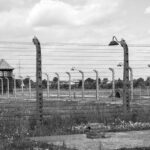
In late 1942, betrayal by a Gestapo informer led to her arrest. She was interrogated, tortured, and condemned as a political prisoner. In January 1943, she was deported to Auschwitz-Birkenau and given prisoner number 27995. There, she was assigned to the gardening commando – forced labour in the confiscated gardens near the village of Rajsko, tending vegetables and flowers for the SS.
But Kotarba did not surrender to the camp’s dehumanising brutality. By summer 1943, she had secretly joined the camp’s resistance network, using her courier skills – honed in the Polish underground – to smuggle food, medicine, and messages to Jewish and other persecuted prisoners.
“Mateczka”: A Friend in the Darkness
Among those she helped was Lena Mańkowska (née Bankier), a Jewish woman deported from the Białystok Ghetto. Despite the extreme danger, Maria risked punishment to bring Lena and her sister Guta vegetables, medicine, and even warm soup, which was carried covertly in a sewn corset with hidden pockets.
For Lena, Kotarba became “Mateczka” – the “Mother of Auschwitz.” When the camp was evacuated in January 1945 and prisoners were forced on a brutal death march, Kotarba rescued Lena – found her frozen in the snow near Ravensbrück and carried her to shelter. Their bond, born amidst horror, endured beyond liberation in May 1945.

Postwar Life and Posthumous Recognition
After the war, Maria returned to Poland. She rarely spoke of the horrors she had survived, the secret acts of kindness she carried out. She lived quietly and died young, on 30 December 1956, in the village of Owczary (her health had never fully recovered from her wartime experiences).
For decades, her deeds remained largely unknown outside a small circle of survivors. But in 2005, following tireless efforts by Lena Mańkowska (by then Lena Łakomy) and researcher James Foucar, Kotarba was finally recognised by Yad Vashem as one of the “Righteous Among the Nations” – the honour awarded to non-Jews who risked their own lives to save Jews during the Holocaust.
The medal and certificate from Yad Vashem now stand as tangible proof that even in the heart of darkness – when the Nazi regime had done everything it could to erode a normal sense of morality – people like Maria Kotarba dared to stand apart.
Why Her Story Matters
In a world where overwhelming statistics often eclipse individual stories, Maria Kotarba reminds us – as do so many “ordinary” heroes – that compassion, bravery, and moral clarity can cut through even the worst tyranny.
Her quiet bravery in smuggling food and medicine to those who most needed them may seem small in comparison to the great battles of WW2, but these acts of defiance helped other human beings survive and preserved dignity in a place built for degradation and death.
More than that: her story challenges us. When institutions fall, when regimes demand compliance through fear, individuals like Kotarba show us that survival need not come at the cost of honour and moral sanity. She risked beatings, death, and worse, in order to help someone else, because it was the right thing to do.
Learn about other wartime heroes by exploring our Polish History Blog archive. If you are travelling in Poland and would like to join us on a tour, explore our Day Tours in Poland and Multi-Day WW2 Tours.